
Limits, tools, and volatility awareness
Playing Book of Cats Responsibly
Book of Cats runs at very-high volatility with a cap of x8,202 stake, so bankroll controls matter more than usual before you spin.
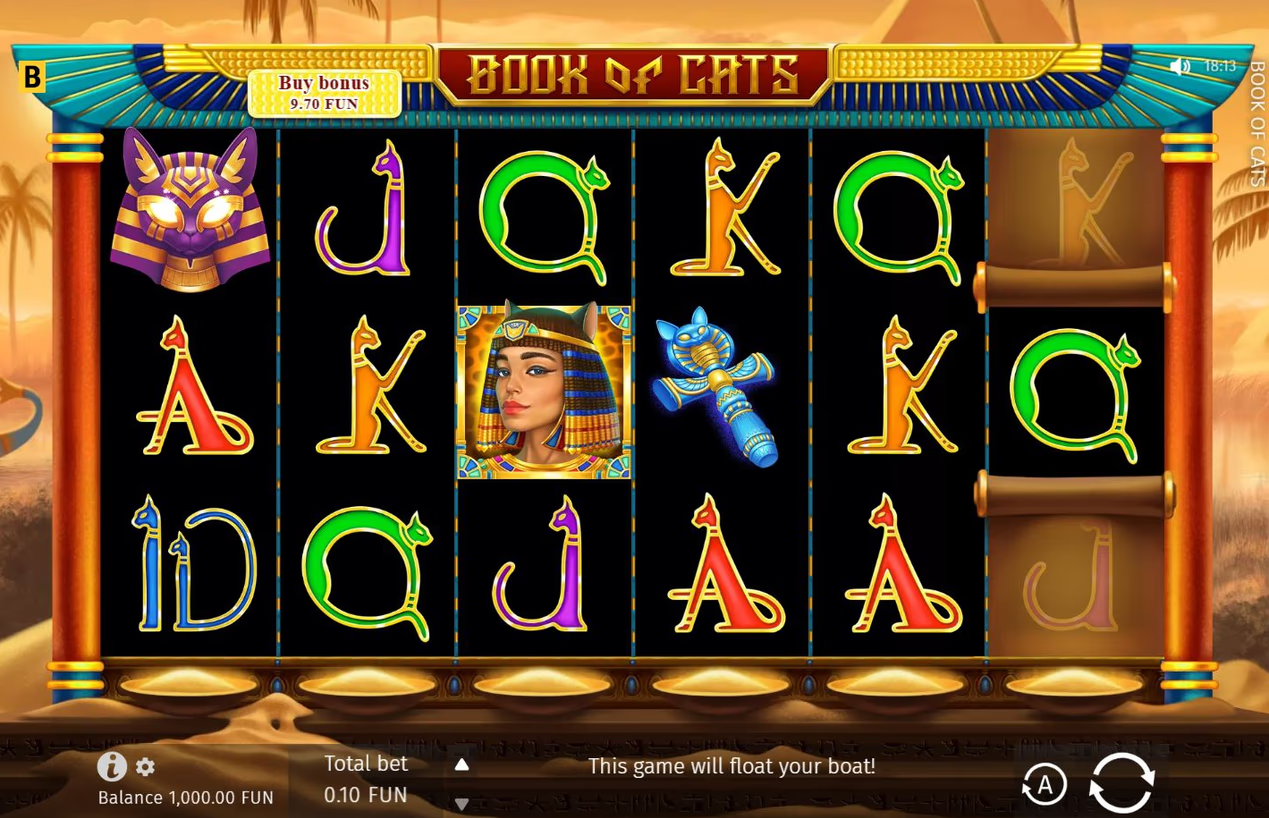
Why this slot needs a plan before you play
BGaming lists Book of Cats at very-high volatility, which means long stretches with no meaningful return followed by a single feature or high-paying symbol hit doing most of the work. That pattern is consistent across third-party reviews of the title, not just the studio's own label. A game built this way can drain a session bankroll quickly if there's no deposit limit, loss limit, or time limit set in advance. This page covers the standard tools available at licensed Canadian-facing casinos and how they apply specifically to a high-swing title like this one, rather than repeating generic slot advice. Play is restricted to those 19 and older, or 18 and older in Alberta, Manitoba, and Quebec.
Setting limits that fit a very-high-volatility title
Deposit limits are the first control worth setting for a title like Book of Cats. Because payouts are concentrated in rare bonus events rather than steady small wins, a fixed deposit ceiling forces a stopping point before a losing streak feels like it needs one more spin to turn around.
Loss limits work the same way but track outcome rather than deposit amount. Given the game's official ceiling of x8,202 stake and a cap around €246,060, the gap between a typical session result and the theoretical maximum is large — a loss limit keeps that gap from being closed with money you didn't plan to spend chasing it.
Session time limits and reality checks address a different problem: pacing. Very-high-volatility slots can feel deceptively slow at low stakes, since small line hits rarely change the balance and it's easy to keep spinning without noticing elapsed time. A reality-check pop-up at a fixed interval interrupts that drift.
Self-exclusion tools, offered by regulated Canadian operators and by third-party services, are the strongest option when a break needs to be enforced rather than just intended. They apply account-wide, not just to a single title, and typically require a cooling-off period before reactivation.
None of these tools change the math behind Book of Cats. The RTP, volatility rating, and payout cap stay fixed regardless of limits set — the tools only control how much time and money you can put behind that math in one sitting.
Using demo mode and bankroll sizing before real stakes
Book of Cats has a demo mode available, and it's the most direct way to see the volatility profile in practice without risking a deposit. Because the free-spins feature is reported to trigger relatively infrequently — around one bonus event per roughly 140 spins in one third-party database — a demo run of a few hundred spins gives a more realistic sense of pacing than a handful of real-money spins ever could.
Bankroll sizing should reflect that infrequency. A bankroll built for smoother, low-volatility games will typically run out before a feature lands here. Casinos and provider pages don't publish a recommended bankroll multiplier for this title, so the practical approach is to size a session around what you're prepared to lose entirely without a bonus round appearing, rather than around an expected average return.
Bet-size selection matters more on a stake-scaled max win. Since the payout ceiling is expressed as a stake multiplier (x8,202) rather than a fixed jackpot, raising your bet raises both the theoretical ceiling and the speed at which a loss limit gets reached. Smaller, consistent stakes keep the volatility from compounding with bet-size risk.
If a session shifts from entertainment to a way of chasing back losses, that's the point to use a cooling-off period or a deposit limit rather than adjusting bet size upward. The game's structure rewards patience with rare, large outcomes — it does not reward increasing stakes to force one to appear sooner.